Education
Virtual sessions, in-person training and on-demand learning
Live learning
Specialities
Clinical resources organized by practice area
Events
Conferences, workshops, and networking opportunities

May 20, 2021
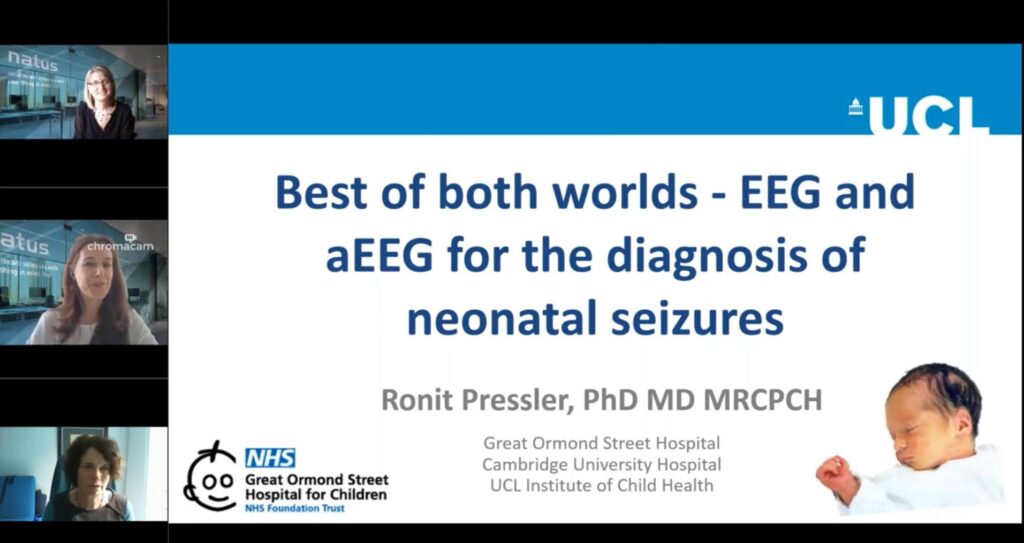
Accurate diagnosis of neonatal seizures is challenging due to the fact that seizures may resemble normal or abnormal neonatal behaviours and many seizures have only subtle clinical signs or are electrographic only. It has been shown that clinical diagnosis is unreliable. Conventional EEG is considered the gold standard for the diagnosis, but it is not available in most NICUs due to lack of on-site specialist support. More commonly used is amplitude-integrated EEG (aEEG) (85% of all NICUs), which provides a slow trend of brain activity using only a limited number of electrodes. While easier to apply and interpret, aEEG has been shown to miss a significant number of seizures and carries a significant risk of false positive detections. New technology allows to record both EEG and aEEG to be recorded at the same time with remote access for specialist support, providing the best of both worlds for the timely diagnosis of neonatal seizures.