Education
Virtual sessions, in-person training and on-demand learning
Live learning
Specialities
Clinical resources organized by practice area
Events
Conferences, workshops, and networking opportunities

March 8, 2023
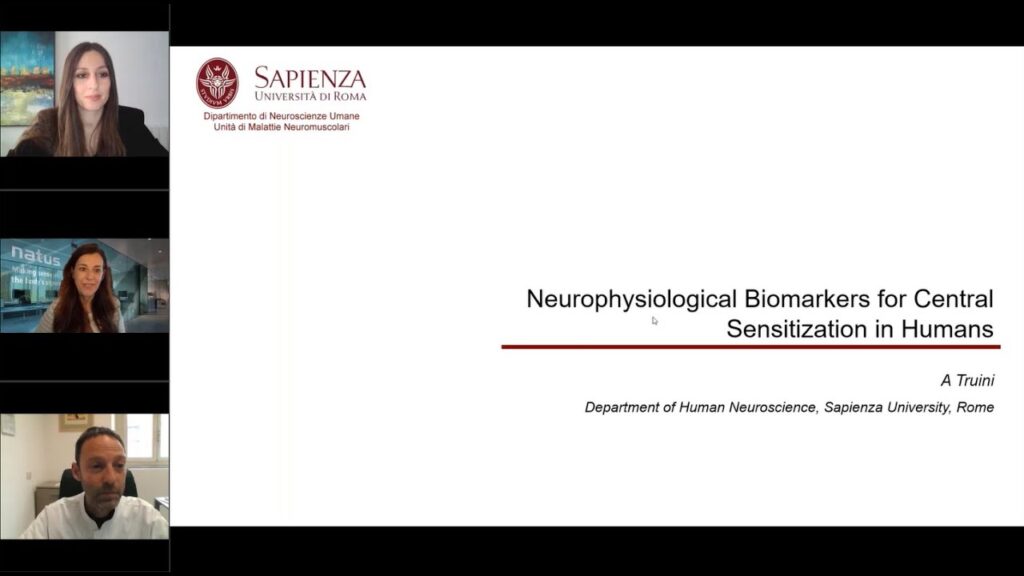
There is a great need for functional biomarkers of nociceptive signal processing and pain translating from animals to humans. Drugs that are efficacious analgesics in preclinical models often prove to have negligible clinical efficacy. For more efficient analgesic development, robust translational measures are needed that can unequivocally prove that a drug has bound to and engaged the target of interest at high enough levels to have a biologically meaningful effect.
In this presentation it be will shown the main neurophysiological biomarkers for nociceptive processing in humans. More specifically, how spinal cord investigations in humans (i.e. N13 component of the somatosensory evoked potentials and the nociceptive RIII reflex) reliably reflect dorsal horn excitability changes due to central sensitization.
Learning objectives